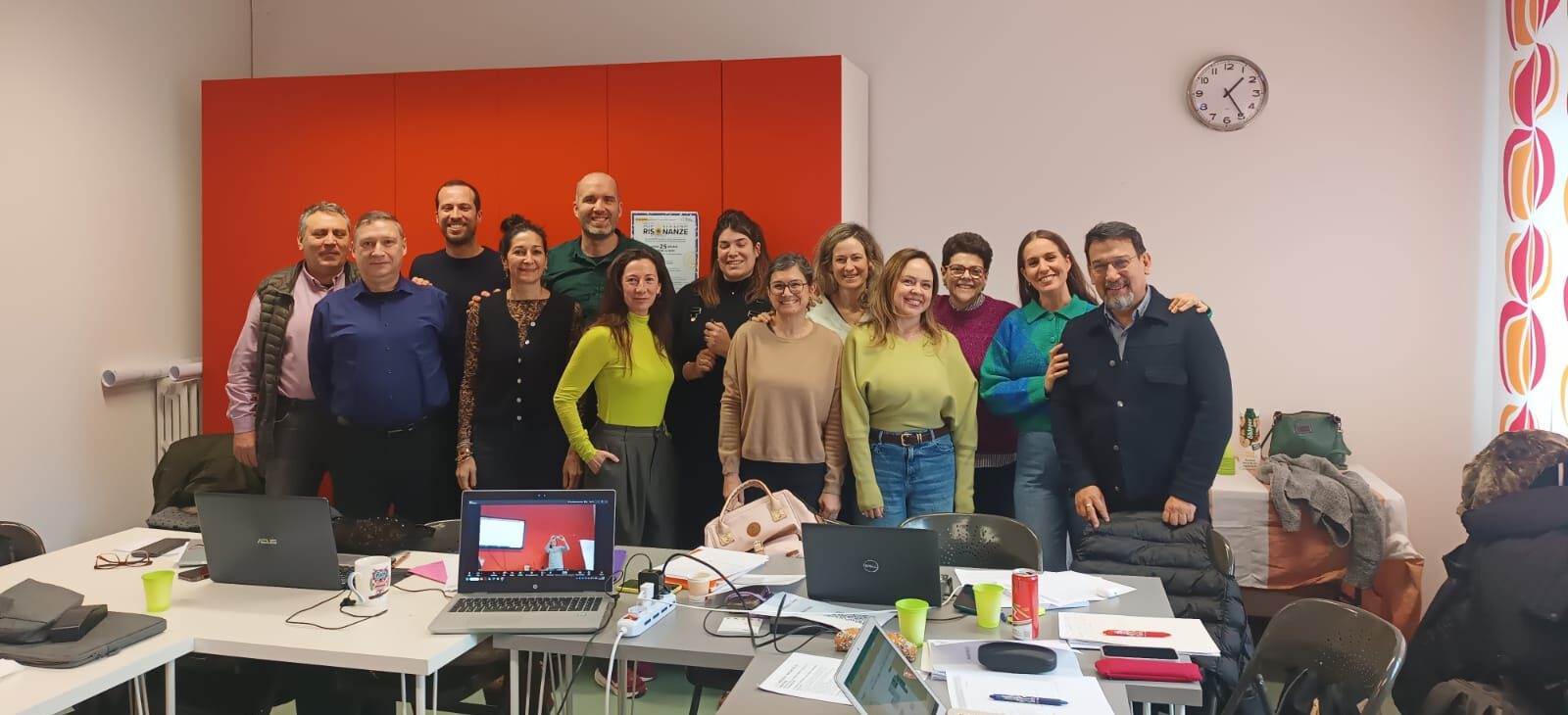
On February 11th, 12th and 13th, a new transnational meeting of the Hedera Project took place in Padua (Italy). Hedera is a European initiative co-funded by the Erasmus+ programme, aimed at developing an innovative model of home-based family therapy designed for professionals in the field of social action.
This meeting brought together the five partner organisations to continue advancing the design, implementation and evaluation of the model.
A key space for European coordination
Transnational meetings are a fundamental element in European cooperation projects. In the case of Hedera, these spaces allow partners to:
- Review the implementation status of the model in each country.
- Share learning derived from work with families.
- Adjust methodological tools and intervention protocols.
- Plan upcoming training and dissemination actions.
The international dimension of the project, with the participation of organisations from Spain, France, Italy and Romania, enriches the model through the exchange of cultural, professional and methodological perspectives.
An innovative model of home-based family intervention
Hedera proposes a structured and systematised approach to home-based family therapy, distinguishing itself from other social interventions that carry out occasional visits without a defined psychotherapeutic model. It is built on four key pillars:
- Theoretical model: A methodological design based on evidence drawn from the experience gained over the past 10 years.
- Implementation: Real-life application of the model with families.
- Evaluation: Analysis of results to generate evidence.
- Training: Professional capacity-building to disseminate the model among other social and therapeutic professionals.
Achievements to date
So far, we have achieved the following milestones:
- Validated model: A theoretical and methodological framework designed and scientifically validated.
- Implementation completed: The empirical phase finalised with 248 families in real-life contexts.
- Positive results: Significant improvements in relational health and family satisfaction when applying the theoretical and methodological concepts of the Hedera Model.
- Training in progress: Professional training programmes currently being implemented (WP4).
Next steps of the Hedera Project
Following this meeting, we continue to move forward in:
- The final evaluation of the Hedera Model.
- The design of professional training programmes.
- Dissemination and results transfer actions.
The ultimate goal is to generate a real impact both on the families supported and on the professional practice of family therapy at the European level.